Gran Canaria Top Places to visit
-
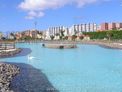 Parque Juan Pablo II (Las Palmas)1Parks and Nature
The largest green space in the capital. Juan Pablo II Park is a 120,000-square-meter area that has provided the upper city district, specifically the Siete Palmas neighborhood, with a large recreational space boasting over a thousand trees and 700 palm trees. It also features a large 3,000-square-meter lake with several waterfalls; a children's playground with a variety of play equipment; a terrace bar; a radio-controlled car track; two multi-sports courts; a 160-space parking lot; a climbing wall; a 950-meter-long bike path; and a 2,300-meter-long walking trail. This park encourages exercise for people of all ages, including those with disabilities, making Las Palmas de Gran Canaria a more inclusive and accessible city.
-
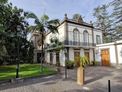 Jardin de la Marquesa Park2Parks and Nature
The Garden of the Marchioness of Arucas is a natural paradise for enjoyment and relaxation. This botanical garden is located in the municipality of Arucas, Gran Canaria. Here you will have the opportunity to enjoy an immense variety of plants and vegetation from all over the world. A jewel for nature lovers in an unbeatable location with an exceptional climate year-round. In the middle of the garden stands the Palacete, the family's summer residence, notable for its façade covered in basalt stone (blue stone), typical of the area where it is located (Arucas). The garden was established around 1880 when the Marquis began the work of collecting plant species, some endemic and others brought from abroad. Many species were specifically brought from different parts of the world, and others were exchanged with aristocratic families of the time. Subsequent generations of Marquises continued this work, and the garden was expanded. At the end of 1985, the garden opened its doors to the general public with guided tours. The narrow, romantic-style walkways alongside the palace were restored, and a botanist carried out the first scientific classification of the species and arranged the plants in the garden. Later, the garden's area expanded to 5 hectares, laid out on several terraces with some slopes, although most species are distributed in the flatter areas. Currently, the garden boasts a diverse array of plants, trees, and especially palm trees, which have adapted and thrived thanks to the climate of Gran Canaria. It also features valuable plant species, such as several dragon trees over two hundred years old. Today, the Garden of the Marchioness of Arucas has 500 classified species that coexist with a colony of peacocks roaming freely.
-
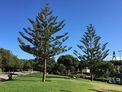 Parque de San Juan (Telde)3Parks and Nature
The lung of Telde. The Parque de San Juan is a unique enclave in the second city of Gran Canaria. A park with different areas of recreo. Cuenta con diversas esculturas del artista Plácido Fleitas, e incluso sus visitors podrán ver un pebetero olímpico. Sin duda, un lugar en que pasar una mañana haciendo deporte, adentrándose en sus arboledas, hacer recorridos en bici, zona de juegos para los más petites de la familia y hasta un lago en que disconnectar de la rutina y el ruido de la ciudad.
-
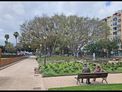 Parque Castillo de La Luz (Las Palmas de Gran Canaria)4Parks and Nature
Next to the Port of La Luz and Las Palmas lies one of the city's historical gems. The Castillo de la Luz (Castle of Light), located in the park of the same name, was built at the end of the 15th century under the orders of Governor Alonso Fajardo and became the city's only northern defense for several years. The fortress has witnessed sieges by pirates such as the British Sir Francis Drake and the Dutch fleet of Peter Van der Does, and today it is primarily a cultural center, housing the Martín Chirino Foundation for Art and Thought. The park is one of the green lungs of the port area and the La Isleta neighborhood. A unique place steeped in history.
-
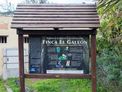 Parque Finca El Galeón (Santa Brígida)5Parks and Nature
This is a leisure and recreation area for all Gran Canaria residents and visitors who enjoy the diverse elements of rural life, along paths that wind through vegetable and fruit orchards, vineyards, and farm animals. This attractive farm is open every day. On weekends, taking advantage of the opening of the Farmers' and Crafts Market in the municipal park right next to the farm, many people spend the day in an ideal setting for families and lovers of the countryside. From the entrance itself, you'll see a scene of vegetable gardens, cobblestone paths, irrigation ditches, and gardens, leading you to an almost unexpected interior, with farm animal pens and shaded areas to relax and read the newspaper or a good book. More Information: El Galeón Recreation Area The El Galeón farm is located in the upper part of the Guiniguada ravine, in the municipality of Santa Brígida. It is characterized by the presence of dry-stone terraces, fountains, corner stones, irrigation channels, sheds, pigpens, etc., all interconnected by paths and cobbled roads. The Galleon in the History of Gran Canaria This place has played an important role in the history of the first centuries after the conquest. According to chronicles, the manor house located on this estate, then owned by Mayor Andrés de la Nuez, became the residence of the island's governor, Alonso Alvarado, serving as his headquarters from which he gave orders to the Castilian troops to repel and defeat the Dutch corsair Pieter Van der Does, who attacked the island in 1599 and captured the walled city of Las Palmas. Governor Alonso Alvarado died defending the Royal Camp of Las Palmas, and Antonio Pamochamoso then assumed command of the Castilian troops, leading the final battle that ended with the defeat and retreat of the Dutch forces. When the ransom demanded for the recapture of the Royal Camp of Las Palmas was not paid, the Dutch set it ablaze, destroyed many defensive structures, and looted a large part of its archives. A vast garden teeming with life The Galeón estate is situated in a thermophilic forest with abundant palm trees, as well as wild olive trees, guaydiles (a type of shrub), mastic trees, mastic trees, and plantations of ornamental trees and shrubs. Nearby is one of Gran Canaria's most emblematic palm groves, the historic Satautejo Palm Grove, at the head of the Guiniguada ravine. Among the most representative fauna of this area, it's worth noting that it's a well-known territory for little owls (Asio otus), avid nocturnal hunters that are great allies of agriculture due to their constant consumption of rodents. Every night, with a little patience, they can be seen silently flying in search of food. During breeding season, on June and July nights, one of the noisiest natural phenomena in the Canary Islands occurs: the chicks incessantly call out for food, emitting a high-pitched and repetitive sound characteristic of our rural world.
Download your Gran Canaria guide!
Favorites
-
- You have currently no favorites. Click on to start planning your trip.